

The Foundation: Why a Monthly Budget is Your Financial North Star
Before diving into the mechanics of creating a budget, it’s crucial to understand why it matters. A monthly budget isn’t just about crunching numbers; it’s about gaining unparalleled insight and control over your financial life. Think of it as the compass that guides your financial journey, ensuring you stay on course towards your desired destination. Without a budget, money can feel like sand slipping through your fingers, leaving you wondering where it all went. With one, every dollar has a purpose.
One of the primary benefits of learning how to create a monthly budget is the profound financial clarity it provides. Many individuals operate with a vague understanding of their income and expenses. A budget forces you to confront the reality of your financial situation, revealing exactly how much you earn and, more importantly, where every penny is being spent. This clarity is the bedrock upon which all other financial improvements are built. It highlights areas of overspending, identifies opportunities for saving, and gives you a realistic picture of your disposable income.
Moreover, a budget is an indispensable tool for debt reduction. High-interest debt can be a crippling burden, preventing you from saving and investing for the future. By meticulously tracking your expenses, a budget helps you identify funds that can be redirected towards aggressive debt repayment. It allows you to prioritize which debts to tackle first, whether using the snowball method (paying off smallest debts first) or the avalanche method (paying off highest interest debts first). This disciplined approach, facilitated by your budget, can significantly accelerate your journey to becoming debt-free.
Beyond debt, a robust budget is critical for savings growth. Whether you’re saving for a down payment on a house, a child’s education, a dream vacation, or your retirement, a budget ensures that saving is not an afterthought but a deliberate line item. It transforms saving from a hopeful intention into a concrete plan, allowing you to set realistic savings goals and track your progress towards them. This intentionality is crucial for building a robust emergency fund – typically 3-6 months of living expenses – which acts as a financial safety net, protecting you from unexpected financial shocks.
Perhaps one of the most overlooked benefits of budgeting is the significant reduction in financial stress. Money worries are a leading cause of anxiety for many. When you know where your money is going and have a plan for it, much of this stress dissipates. You gain a sense of control and empowerment, replacing uncertainty with confidence. This peace of mind allows you to focus on other aspects of your life, knowing your financial house is in order.
Finally, a budget is not just for short-term fixes; it’s a powerful instrument for achieving your long-term financial goals. By consistently managing your monthly finances, you lay the groundwork for more ambitious objectives, such as securing financial independence and even learning how to build generational wealth. Each month you successfully adhere to your budget, you’re not just managing money; you’re actively shaping your future, making intentional choices that compound over time to create lasting financial security for yourself and your loved ones. It’s the essential first step towards transforming your financial dreams into tangible realities.
Step-by-Step Guide to Crafting Your First Monthly Budget
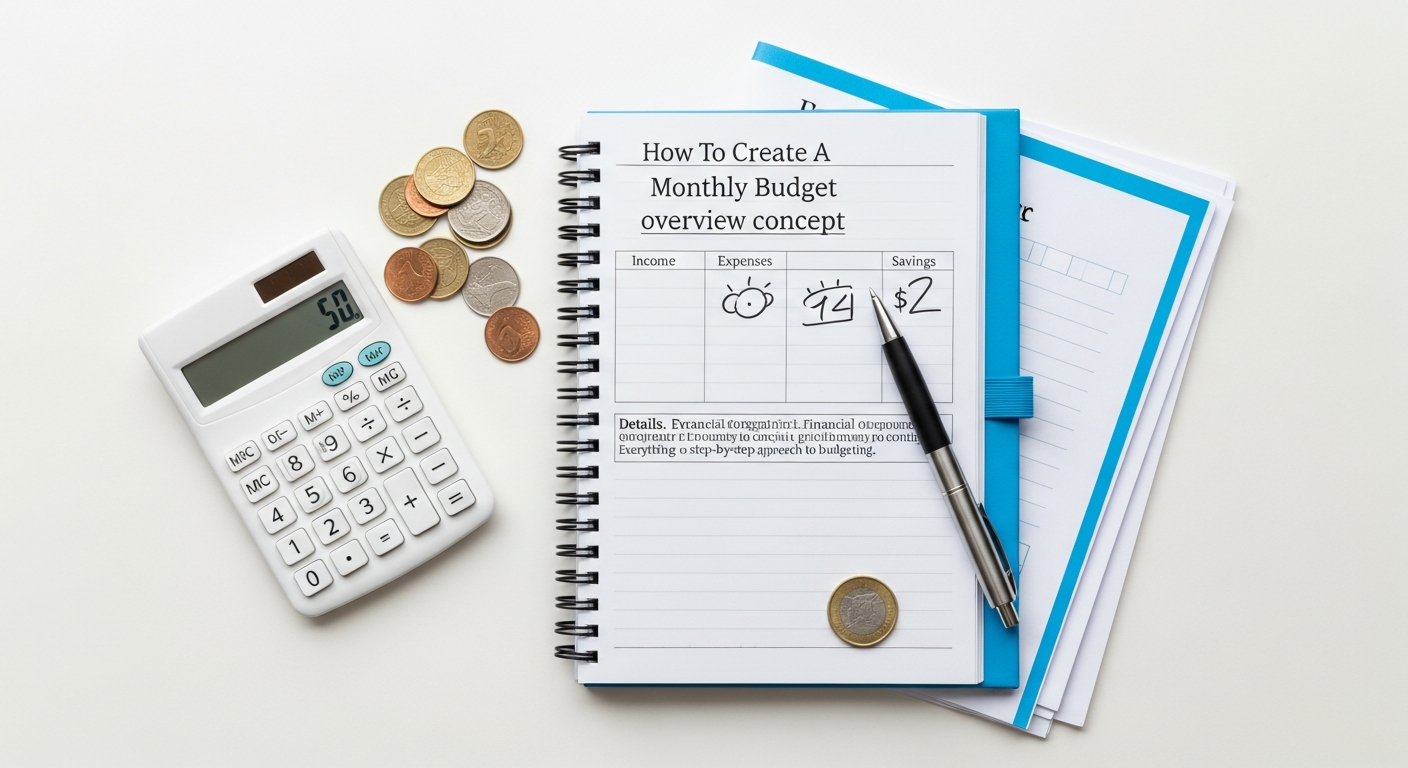
Creating a monthly budget might seem daunting at first, but by breaking it down into manageable steps, you’ll find it’s a straightforward and incredibly rewarding process. The key is consistency and a willingness to be honest with yourself about your financial habits. Follow these steps to learn how to create a monthly budget that truly serves your needs.
Step 1: Gather Your Financial Data
The very first step is to collect all the necessary information. This means getting a clear picture of all your income streams and all your expenditures. Think of yourself as a financial detective. You’ll need:
- Income Statements: Recent pay stubs, tax returns, or bank statements showing direct deposits. If you have irregular income (freelance, commissions), gather several months of data to calculate an average.
- Bank Statements: Statements from all checking and savings accounts for the past 1-3 months.
- Credit Card Statements: Statements from all active credit cards for the past 1-3 months.
- Loan Statements: Mortgage, car loan, student loan, personal loan statements.
- Utility Bills: Electricity, gas, water, internet, cell phone bills.
- Other Bills: Insurance premiums (auto, home, health, life), subscription services (streaming, gym, software), childcare costs, etc.
Having this information readily available will make the subsequent steps much smoother and ensure accuracy.
Step 2: Calculate Your Total Monthly Income
Once you have your income data, the next step is to determine your total net monthly income. This is the amount of money you actually have available to spend and save after taxes, 401(k) contributions, health insurance premiums, and other deductions are taken out of your gross pay. It’s crucial to use your net income, as this reflects the real money hitting your bank account.
- If you have a consistent salary, simply take your net pay from your most recent pay stub and multiply it by the number of paychecks you receive per month (e.g., bi-weekly pay means two checks per month, but sometimes three in a “bonus” month).
- If you have irregular income, average your net income over the past 3-6 months to get a realistic monthly figure. It’s often wise to budget based on a slightly lower average to build in a buffer.
- Include any other regular income sources, such as rental income, alimony, or child support.
This total net income figure will be the foundation of your budget – the total amount of money you have to allocate.
Step 3: Track and Categorize Your Expenses
This is where many people get tripped up, but it’s arguably the most revealing step in learning how to create a monthly budget. You need to identify and categorize every dollar you spend. Expenses generally fall into two main categories:
- Fixed Expenses: These are expenses that are generally the same amount each month and are non-negotiable (e.g., rent/mortgage, car payments, insurance premiums, loan payments, some subscriptions).
- Variable Expenses: These amounts fluctuate from month to month and are often areas where you have more control (e.g., groceries, dining out, entertainment, utilities, gas, clothing, personal care).
Go through your bank and credit card statements from Step 1. For each transaction, assign it to a category. Common categories include:
- Housing (rent/mortgage, property taxes, home insurance)
- Utilities (electricity, gas, water, internet, phone)
- Transportation (car payment, gas, public transport, maintenance)
- Food (groceries, dining out)
- Insurance (auto, health, life)
- Debt Payments (student loans, credit cards, personal loans)
- Personal Care (haircuts, toiletries)
- Entertainment (movies, concerts, hobbies)
- Subscriptions (streaming services, gym memberships)
- Savings (emergency fund, retirement, specific goals)
- Miscellaneous (unexpected costs, gifts)
Don’t forget those small, seemingly insignificant daily purchases – coffees, snacks, apps – as these can quickly add up and become significant “money leaks.” Manually tracking for a month or two initially can be highly insightful, even if you plan to use an app later.
Step 4: Allocate Funds and Set Limits (The Budgeting Method)
Now that you know your income and your expenses, it’s time to create your budget plan. The goal is to ensure your total expenses (including savings goals) do not exceed your total net income. There are several popular budgeting methods, and the best one for you depends on your preferences and financial situation:
- The 50/30/20 Rule: This simple method allocates your after-tax income as follows:
- 50% to Needs: Housing, utilities, groceries, transportation, insurance, minimum debt payments.
- 30% to Wants: Dining out, entertainment, hobbies, shopping, vacations, non-essential subscriptions.
- 20% to Savings & Debt Repayment: Emergency fund, retirement contributions, investments, extra debt payments beyond the minimum.
This method offers a good balance and is an excellent starting point for many.
- Zero-Based Budgeting: With this method, you assign every dollar of your income a job until your income minus your expenses (including savings) equals zero. This doesn’t mean you spend all your money; it means you intentionally allocate it all. Every dollar is accounted for, whether it’s for a bill, a savings goal, or a discretionary purchase. This method provides maximum control and clarity.
- The Envelope System: A classic method, particularly effective for variable expenses. You allocate a certain amount of cash for categories like groceries, entertainment, or dining out. Once the cash in the envelope is gone, you stop spending in that category until the next budgeting period. This is a powerful visual and tactile way to limit spending and can be adapted with digital tools.
Choose a method that resonates with you and begin assigning specific dollar amounts to each of your expense categories. Be realistic. If you enjoy dining out, don’t cut it to zero immediately; rather, reduce it to a sustainable level. The goal is to create a budget you can stick to, not one that feels overly restrictive and leads to burnout.
Step 5: Monitor, Adjust, and Review Regularly
Creating a budget is not a one-time event; it’s an ongoing process. Your first budget will likely not be perfect, and that’s perfectly fine. The real power of budgeting comes from consistent monitoring and regular adjustments.
- Monitor Your Spending: Throughout the month, track your spending against your allocated budget categories. This can be done manually with a notebook, using a spreadsheet, or most conveniently, with a budgeting app (more on this below).
- Identify Discrepancies: At the end of the month, compare your actual spending with your budgeted amounts. Did you overspend in certain areas? Underspend in others?
- Adjust as Needed: Based on your monitoring, make adjustments for the next month. If you consistently go over budget on groceries, perhaps you need to allocate more to that category or find ways to cut back elsewhere. If you have extra funds, consider increasing your savings or debt payments. Life changes – a new job, a raise, an unexpected expense – will also necessitate budget adjustments.
- Schedule Regular Reviews: Make it a habit to review your budget at least once a month, preferably before the new month begins. A quarterly or annual comprehensive review is also beneficial to ensure your budget aligns with your long-term goals and any significant life changes.
Remember, your budget is a living document. It should evolve with your life circumstances and financial goals. The more consistently you monitor and adjust, the more effective it will become in helping you achieve financial success.
Leveraging Technology: Best Budgeting Apps in 2026
Modern budgeting apps bring a host of benefits that traditional methods simply cannot match. One of their most significant advantages is automation. Most apps can securely link to your bank accounts, credit cards, and investment accounts, automatically importing transactions and categorizing them. This eliminates the tedious manual entry that often deters people from sticking to a budget. Imagine seeing all your financial activity consolidated in one place, updated in real-time – this level of immediate insight is transformative.
Beyond automation, these apps offer powerful analytical capabilities. They can generate detailed reports and visual summaries of your spending patterns, highlighting where your money is going with a clarity that static spreadsheets often lack. You can easily see how much you’ve spent on dining out compared to groceries, or what percentage of your income goes towards housing. These insights are invaluable for identifying areas where you can cut back or reallocate funds more effectively.
Goal tracking is another area where budgeting apps excel. Whether you’re saving for a down payment, an emergency fund, or a specific investment, these apps allow you to set clear financial goals and track your progress toward them. Many provide visual progress bars and celebratory notifications, offering motivation to stay on track. Some even project how long it will take to reach your goals based on your current saving rate, empowering you to make adjustments if you want to accelerate your progress.
The landscape of budgeting apps is diverse, catering to various needs and preferences. Some apps are designed for simplicity, offering straightforward expense tracking and basic budgeting categories. Others are comprehensive financial aggregators, providing a holistic view of your entire financial life, including investments, net worth tracking, and even bill reminders. There are apps that strictly adhere to specific budgeting philosophies, like zero-based budgeting, while others are more flexible, allowing you to customize categories and rules.
When considering the Best Budgeting Apps 2026, look for features such as:
- Secure Bank Integration: Ensures your financial data is protected while allowing for automatic transaction imports.
- Customizable Categories: The ability to tailor expense categories to fit your lifestyle.
- Real-time Tracking: Updates as transactions occur, giving you an immediate picture of your spending.
- Goal Setting: Tools to create and monitor progress towards specific financial objectives.
- Reporting & Visualization: Clear charts and graphs that make complex data easy to understand.
- Alerts & Notifications: Reminders for upcoming bills, warnings if you’re nearing budget limits.
- Net Worth Tracking: For a more holistic financial overview, including assets and liabilities.
While technology makes budgeting easier, it’s important to remember that the app is merely a tool. Its effectiveness still depends on your engagement and willingness to review and act on the information it provides. However, for those seeking efficiency, detailed insights, and a more engaging way to manage their money, embracing the power of budgeting apps is an essential component of modern personal finance.
Optimizing Your Budget: Strategies to Lower Expenses and Boost Savings
Once you’ve mastered how to create a monthly budget and are consistently tracking your income and expenses, the next logical step is to optimize it. This involves actively looking for opportunities to reduce your outgoings and free up more money for savings, investments, or debt repayment. This proactive approach is where significant financial gains can be made, accelerating your journey towards financial freedom. A key component of this optimization is learning how to negotiate bills and lower expenses.
Reviewing Subscription Services
In the digital age, subscription creep is a silent budget killer. Most people are subscribed to numerous services – streaming platforms, gym memberships, software, meal kits, beauty boxes – many of which they rarely use or have forgotten about entirely. Dedicate time each month to audit your subscriptions. Cancel anything you don’t actively use or truly value. Consider sharing subscriptions with family members if possible, or opting for free alternatives. Even saving $10-$20 a month across a few services can add up to hundreds of dollars annually.
Cutting Discretionary Spending
Discretionary spending, often categorized as “wants,” is usually the easiest place to find savings. While it’s important not to completely deprive yourself, small adjustments can make a big difference. Evaluate your spending on dining out, entertainment, impulse purchases, and expensive coffees. Can you cook more meals at home? Choose free or low-cost entertainment options? Pack your lunch? Delay non-essential purchases for 24-48 hours to avoid impulse buys? These small, consistent changes can quickly add up to substantial savings.
Negotiating Bills and Insurance
Many of your recurring fixed expenses are not as “fixed” as you might think. This is where mastering how to negotiate bills and lower expenses becomes incredibly powerful. Don’t be afraid to call your service providers:
- Internet & Cable: Call your provider and ask if you’re on the best plan. Mention competitor offers or threatening to switch. Often, they will offer a better deal or promotional rate to retain your business.
- Cell Phone: Review your data usage. Are you paying for more data than you need? Explore cheaper plans, family plans, or different providers.
- Insurance (Auto, Home, Health): Shop around annually for better rates. Get quotes from multiple companies. Sometimes, simply telling your current provider about a lower quote from a competitor can prompt them to match or beat it. Ask about potential discounts (e.g., for bundling policies, good driving, home security systems).
- Credit Card Interest Rates: If you carry a balance, call your credit card company and ask for a lower interest rate, especially if you have a good payment history.
- Utilities: Look into energy-saving habits and devices for your home. Some utility companies offer free energy audits or programs to help reduce consumption.
A few phone calls each year can result in significant long-term savings. Remember, companies want to keep you as a customer, so they often have retention offers available.
Smart Shopping and Meal Planning
Groceries are a major variable expense for most households. Strategic meal planning can drastically reduce this cost. Plan your meals for the week, create a shopping list, and stick to it to avoid impulse buys. Buy generic brands when possible, look for sales, and consider buying in bulk for non-perishable items. Reducing food waste by using leftovers and proper storage also contributes to savings. Similarly, for other shopping needs, always compare prices, look for coupons or discounts, and consider buying second-hand where appropriate.
Evaluating Housing and Transportation Costs
While often considered fixed, housing and transportation are typically the two largest expenses for most individuals and families. While these are harder to change in the short term, they are worth evaluating periodically:
- Housing: Is your current housing truly affordable? If your rent or mortgage payment is consuming too much of your income (e.g., more than 30-35%), it might be worth exploring options like refinancing, finding a roommate, or even considering a move to a more affordable area in the long run.
- Transportation: Can you carpool, use public transport more often, or bike/walk for shorter distances? If you have a car payment, is it affordable? Could you downsize to a more fuel-efficient or less expensive vehicle when it’s time for a new one?
Optimizing your budget is an ongoing process of vigilance and strategic decision-making. By regularly reviewing your expenses and actively seeking ways to reduce them, you not only improve your monthly cash flow but also create more opportunities to build robust savings and invest in your future.
Beyond the Monthly Budget: Building Generational Wealth and Financial Freedom
While mastering how to create a monthly budget is a powerful first step, its true impact extends far beyond just managing your immediate cash flow. A well-executed budget is the fundamental building block for achieving genuine financial freedom and, for those with a long-term vision, even learning how to build generational wealth. It’s about translating daily financial discipline into enduring prosperity that can benefit not just yourself, but also future generations.
The consistent surplus created by an optimized budget provides the fuel for strategic financial growth. This growth typically begins with establishing a robust emergency fund. Having 3-6 months’ worth of living expenses readily accessible in a separate, liquid account provides an essential buffer against unexpected job loss, medical emergencies, or unforeseen home repairs. This fund is non-negotiable for financial stability; it prevents you from falling back into debt when life throws a curveball, thereby preserving the integrity of your carefully constructed budget.
Once your emergency fund is solid, your budget can then be directed towards more aggressive debt management, particularly high-interest debts like credit card balances. Every extra dollar allocated to these debts, beyond the minimum payment, reduces the total interest paid and frees up more cash flow in the long run. This accelerates your journey to debt freedom, which is a critical precursor to wealth building.
The next major frontier is investing. Your budget dictates how much you can consistently contribute to investment vehicles, which are the primary engines of wealth creation. This includes:
- Retirement Accounts: Maximize contributions to employer-sponsored plans like 401(k)s (especially if there’s an employer match – that’s free money!), and individual retirement accounts (IRAs) such as Roth IRAs or Traditional IRAs. These accounts offer significant tax advantages and are designed for long-term growth.
- Brokerage Accounts: For savings beyond retirement, a taxable brokerage account allows you to invest in a diversified portfolio of stocks, bonds, mutual funds, or exchange-traded funds (ETFs). Consistent, disciplined investing, even of modest amounts, benefits from the power of compound interest over decades.
- Real Estate: For some, investing in real estate, whether primary residence or rental properties, can be a significant component of wealth building, though it often requires substantial capital and carries its own set of risks and responsibilities.
The concept of how to build generational wealth takes these principles a step further. It involves not just accumulating assets for yourself, but establishing a financial legacy that can be passed down and continue to grow, benefiting your children, grandchildren, and beyond. This requires:
- Financial Education: Teaching your children and younger family members about budgeting, saving, investing, and the value of money is paramount. This knowledge transfer is arguably the most valuable inheritance you can provide.
- Estate Planning: Creating a comprehensive estate plan, including wills, trusts, and advance directives, ensures your assets are distributed according to your wishes and can minimize taxes and legal complexities for your heirs.
- Strategic Asset Protection: Utilizing insurance and legal structures to protect your accumulated wealth from unforeseen circumstances, lawsuits, or excessive taxation.
- Philanthropy and Values: Integrating charitable giving and instilling strong financial values within your family ensures that wealth is managed responsibly and used for positive impact.
Ultimately, a monthly budget is not about living frugally forever; it’s about making conscious choices today to fund a more prosperous tomorrow. It’s the discipline that allows you to save for important milestones, invest strategically, pay down debt, and ultimately create a financial foundation strong enough to support not just your own dreams of financial freedom, but also the long-term well-being and prosperity of your entire lineage. It’s the starting point for a journey that leads to a truly empowered financial future.
Frequently Asked Questions
Recommended Resources
For more on how to create, see Ecommerce Return Policy Best Practices on E-ComProfits.
Check out How To Scale A Small Business 2026 on Page Release for a deeper dive.
From Our Network
- what is demand generation in marketing (en Kacerr)
- how to set and achieve professional goals (en Assetbar)